Trekking at High Altitude in Tibet: Acclimatization, AMS & Safety Tips
Ashish Gurung
Last Updated on Mar 26, 2026
Trekking across the rugged beauty of Tibet is a once-in-a-lifetime adventure but it’s also a journey that takes you into extreme altitudes where your body needs to adapt. Whether you’re hiking the sacred Mount Kailash Kora or exploring the hidden valleys of Central Tibet, it’s important to understand how to trek safely and enjoyably at high elevation.
In this blog, we’ll walk you through everything you need to know about acclimatization, altitude sickness (AMS), and the top safety tips for trekking in Tibet so you can focus on the views, not the worries.
Table of Contents
Understanding the Thin Air: What Happens to Your Body at High Altitude
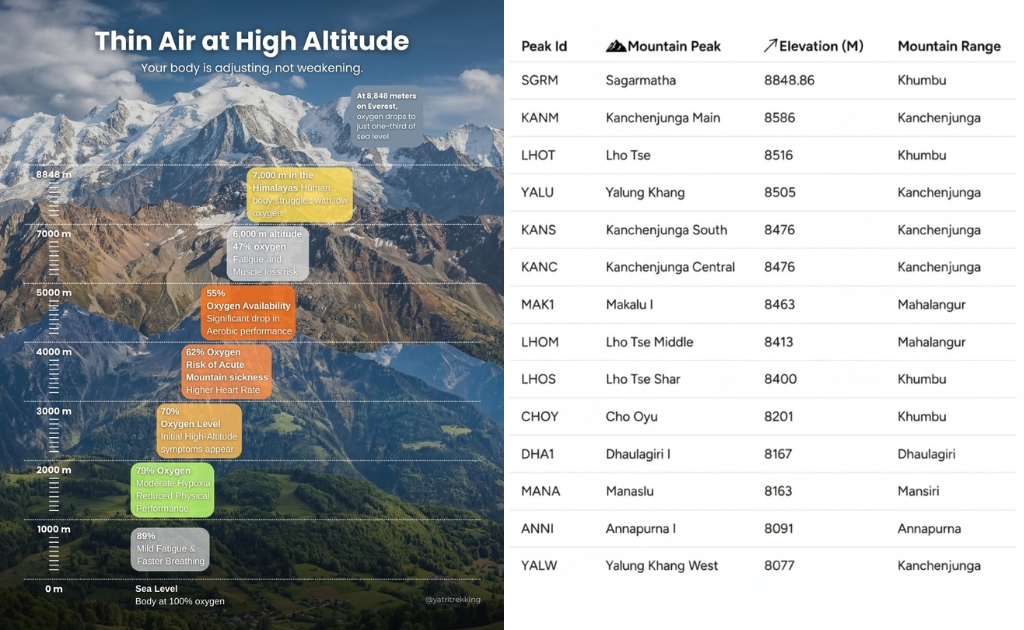
The thin air of high altitude landscapes highlights the challenges of low oxygen levels above 4,000 meters.
Trekking through Tibet’s majestic highlands might look like a dream, but behind the scenic views lies a challenge many trekkers underestimate the effects of thin air at high altitude. Once you cross 2,500 meters (8,200 feet), oxygen levels begin to drop, and your body has to work harder to adjust. Tibet’s popular trekking routes, like the Mount Kailash Kora or the Ganden to Samye Trek, often climb above 4,500 meters, making altitude a serious concern for every traveler.
As the air gets thinner, your body compensates by increasing your breathing rate and heart rate. This is part of the acclimatization process. However, if your ascent is too quick or your body doesn’t get enough time to adjust, symptoms of Acute Mountain Sickness (AMS) may start appearing headaches, nausea, fatigue, and dizziness are common early signs.
Whether you’re a seasoned trekker or a first-timer, understanding how your body reacts to high elevation is the first step toward a safe adventure in Tibet. Want a deep dive into AMS symptoms and how to avoid them?
Planning a trek above 4,000 meters? Explore our Tibet trekking packages that are designed with acclimatization in mind. For more on how high altitude affects the body, visit the CDC’s High Altitude Travel Guidelines.
Altitude Sickness in Tibet: Know the Symptoms Before It’s Too Late
Altitude sickness doesn’t care how fit or experienced you are it can affect anyone trekking above 2,500 meters, especially in high-altitude regions like Tibet. Known medically as Acute Mountain Sickness (AMS), it starts subtly but can escalate fast if ignored. Since most treks in Tibet cross elevations of 4,000 meters or more, recognizing the early symptoms can make or break your experience.
Common signs of AMS include persistent headaches, nausea, dizziness, loss of appetite, fatigue, and disturbed sleep. These symptoms usually appear within the first 6–24 hours of gaining altitude. If you ascend too quickly without rest days, AMS can progress to more severe conditions like High-Altitude Pulmonary Edema (HAPE) or High-Altitude Cerebral Edema (HACE) both of which can be life-threatening.
The golden rule is simple: if symptoms worsen, don’t climb higher. Instead, rest or descend. Carrying a pulse oximeter to monitor oxygen saturation, staying well-hydrated, and having altitude medication like Diamox (only with professional advice) can help mitigate risks.
Want to be fully prepared for high-altitude trekking? Read our guide on Is Everest Base Camp Trek Safe? for practical tips that also apply to trekking in Tibet.
How to Acclimatize Properly While Trekking in Tibet
Acclimatization isn’t just a recommendation it’s a lifesaving strategy when trekking at high altitudes in Tibet. Whether you're heading for the sacred Mount Kailash or traversing the Ganden to Samye trail, giving your body enough time to adjust to the elevation is crucial for a safe and enjoyable journey.
The general rule is: “climb high, sleep low.” This means you can trek to higher altitudes during the day but should sleep at a lower elevation to let your body recover. Experts recommend ascending no more than 500 meters per day above 3,000 meters, and taking a rest day every 3 to 4 days.
Other key acclimatization tips include:
Staying hydrated (3-4 liters per day)
Eating light and high-carb meals
Avoiding alcohol and smoking
Pacing yourself slowly (avoid rushing on the trail)
Trekkers should also be mindful when planning their itinerary. A rushed itinerary increases the risk of AMS. At Yatri Trekking, we prioritize slow and safe ascent profiles in all our Tibet trekking itineraries, with built-in acclimatization days.
Helpful External Resource: For more detailed recommendations, refer to the UIAA Medical Commission’s Guidelines for High Altitude Trekking.
Not sure how to structure your trek? Let us help you plan an itinerary with the right balance of adventure and safety. Get in touch with us today.
Top Safety Tips for High-Altitude Treks in Tibet
Trekking in Tibet offers unmatched beauty from the turquoise waters of Yamdrok Lake to the spiritual solitude of Mount Kailash but safety should always be your top priority. High altitude, harsh weather, and remote terrain can make the experience physically demanding. However, with the right precautions, you can enjoy a safe and unforgettable trek.
Here are essential safety tips every trekker should follow:
Acclimatize Gradually: Never skip rest days. A slow ascent significantly reduces the risk of altitude sickness.
Know Your Limits: Don’t push yourself too hard. Listen to your body and descend immediately if symptoms worsen.
Carry a First Aid Kit: Include essentials like painkillers, anti-nausea tablets, blister care, Diamox (for altitude), and a thermometer.
Hire a Licensed Guide: Trekking with a local expert ensures not only navigation and communication help but also immediate support in emergencies. Check out our Tibet trekking guides for experienced professionals.
Pack for All Conditions: Weather in Tibet can change quickly. Pack windproof jackets, thermal layers, gloves, sunglasses, and SPF 50+ sunscreen.
Stay Connected: Carry a satellite phone or a GPS tracker. Cell coverage is limited in remote areas.
Have Emergency Evacuation Insurance: Evacuations in Tibet can be costly. Make sure your insurance covers high-altitude trekking and emergency helicopter rescue.
Want a customized gear checklist for Tibet? Reach out to our team and we’ll guide you personally.
Best Practices for Preventing AMS While Trekking in Tibet
Preventing Acute Mountain Sickness (AMS) starts long before you hit the trail. The way you plan, prepare, and behave on the trek makes all the difference. AMS can creep in unexpectedly, but the right approach reduces the risk significantly even at altitudes above 4,500 meters, which are common in Tibetan treks.
Here are proven tips to prevent AMS during your Tibet trekking adventure:
Start Slow: Avoid flying directly to high-altitude cities like Lhasa and heading straight into trekking. Spend at least 2 days acclimatizing.
Follow the 500m Rule: Don’t gain more than 500 meters in sleeping elevation per day above 3,000 meters.
Hydrate, Hydrate, Hydrate: Thin air causes rapid dehydration. Drink 3–4 liters of water daily.
Eat Carbs: High-carb meals help your body use oxygen more efficiently at altitude.
Skip Alcohol and Smoking: Both reduce oxygen absorption and delay acclimatization.
Take Diamox (if prescribed): Start a day before your ascent to help your body adjust.
Don’t Ignore Symptoms: Even mild headaches should be taken seriously. Descend if symptoms worsen.
At Yatri Trekking, our Tibet trekking packages are crafted with built-in rest days and altitude buffers, so you don’t have to compromise your health for the view.
Want to trek Tibet without the stress of altitude worries? Speak with our experts and we’ll help plan a safe, AMS-aware itinerary just for you.
When to Seek Help: Emergency Situations in the Himalayas of Tibet
In the high Himalayas of Tibet, knowing when to seek help can mean the difference between a quick recovery and a dangerous situation. AMS may start mildly, but it can quickly escalate into life-threatening conditions like HAPE (fluid in the lungs) or HACE (swelling in the brain) if not managed properly.
Here are red flags you should never ignore:
Severe shortness of breath at rest
Persistent vomiting
Confusion, hallucinations, or inability to walk straight
Chest tightness or gurgling sounds in the lungs
Loss of consciousness
If you or anyone in your group experiences these symptoms, descend immediately even at night. Do not wait for morning. Administer oxygen if available and contact emergency services or your tour operator immediately. Having travel insurance that covers high-altitude evacuation is not optional it’s essential.
Trekking with Yatri means you’re never alone. All our guided treks in Tibet include emergency support, trained guides, and access to medical backup.
Want emergency planning included in your itinerary? Talk to us today and trek Tibet with confidence.
Final Thoughts: Trekking Tibet the Safe and Smart Way
Trekking in Tibet is a once-in-a-lifetime adventure, with its majestic peaks, ancient monasteries, and spiritual landscapes. But at elevations above 4,000 meters, it's not just the beauty that takes your breath away it's the altitude too. That’s why safety and preparation are just as important as your trekking boots.
Whether you're walking the sacred circuit of Mount Kailash or exploring the trails from Ganden to Samye, your approach to acclimatization, AMS prevention, and emergency planning will define your experience. The goal isn’t just to reach a destination, but to enjoy the journey free from the risks of altitude illness.
With Yatri Trekking, we prioritize your health without compromising your adventure. Our carefully crafted Tibet trekking itineraries are designed with built-in rest days, expert guides trained in altitude response, and 24/7 support even in the most remote regions.
Final Tips Before You Go:
Choose an itinerary with gradual altitude gain
Travel with experienced guides
Pack smart and light
Be mindful of your body’s signals
Always have travel insurance that covers high-altitude trekking
If you're just starting your Himalayan journey, read our blog on Best Time for Trekking in Nepal many of the timing tips also apply to Tibetan routes

.webp)
.webp)