Nepal’s immigration department has changed the rules so that now even a single foreign traveler can get a Restricted Area Trekking Permit. On March 22, 2026, the Department of Immigration announced that the old “two-person minimum” rule would be lifted. This means an individual foreign trekker can obtain a permit for places like Upper Mustang, Dolpo, Manaslu, Tsum Valley, Nar-Phu, Kanchenjunga, Humla, and other remote regions (formerly only open to groups). The update came after trekking agencies (like TAAN) and others lobbied to boost tourism and let solo adventurers explore these special areas.
Despite this change, safety rules remain strict. Solo trekkers must book through a registered trekking agency and have a licensed Nepali guide with them at all times. The trekker’s agency is then fully responsible for all logistics and any emergency rescue during the trek. This means you cannot plan a solo independent hike; the agency and guide ensure permits, support, and safety. To improve oversight, Nepal now also limits one guide to a maximum of 7 trekkers per group.
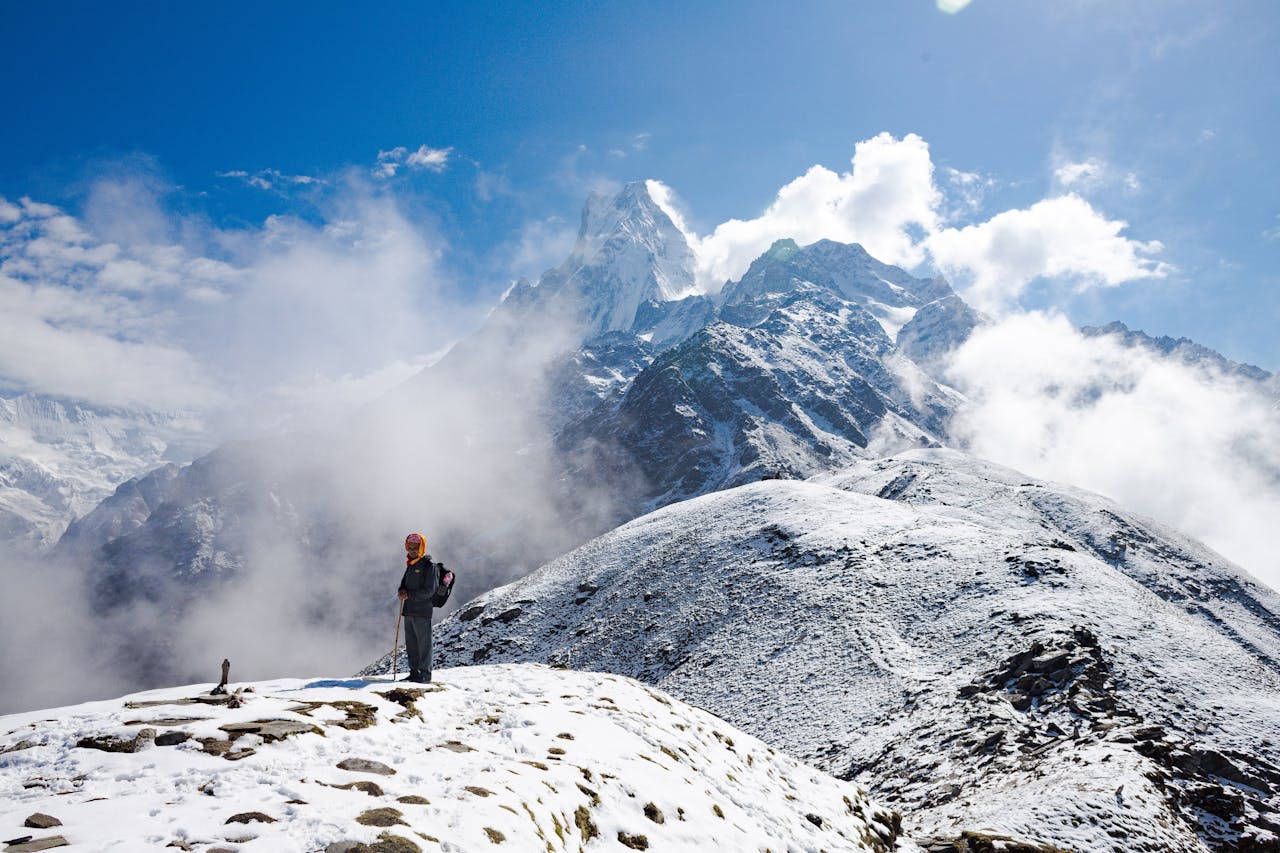
- Solo Permits Now Allowed: Before, a restricted-area trekking permit needed at least 2 foreign trekkers. Now individual foreign trekkers can apply for these permits.
- Agency & Guide Required: Every trekker must book through a government-registered trekking agency and hire a licensed guide. Your guide leads you on the trek, and the agency handles planning. These are still mandatory steps.
- Agency Handles Rescue: The agency that issues your permit takes care of all rescue and emergency plans. In an official notice, Nepal’s Immigration Department says “the facilitating agency will be fully responsible for emergency rescue and logistical arrangements”.
- Guide-to-Trekker Ratio: New rules allow one licensed guide per up to 7 trekkers. This cap (1:7 ratio) helps agencies safely manage groups.
- Digital Permits (Pre-Arrival): Nepal now has an online system for these permits. Foreign visitors in Nepal use their visa number to apply; those applying from abroad use a special “Application Submission ID” to pay fees in advance. This means you can get your permit sorted before you land in Kathmandu.
Every permit still follows the fixed route and duration approved by the authorities. You must enter and exit the restricted zone only at official checkpoints, and carry the printed permit with you (digital copies are not accepted). If you need changes (route shifts or longer stays), your agency must arrange permit extensions before you reach a checkpoint
Trekking Areas Covered and Restricted Area Permit Costs in Nepal (2026)
The revised policy covers all of Nepal’s declared restricted regions, and even though the rule changed, permit prices are the same. Some of the main ones are:
- Upper Mustang (Lo Manthang) – the former “Forbidden Kingdom” in Mustang District.
- USD 500 per person for first 10 days
- USD 50 per day after 10 days
- Dolpo (Upper & Lower) – isolated Himalayan plateaus in Dolpa District.
- USD 500 for first 10 days, USD 50 per extra day ( Upper )
- USD 20 per week ( Lower )
- Manaslu Circuit & Tsum Valley – high passes and valleys in Gorkha District.
- Sept to Nov: USD 100 for first 7 days, USD 15 per extra day, Dec to Aug: USD 75 for first 7 days, USD 10 per extra day (Manaslu Circuit)
- Sept to Nov: USD 40 per week, Dec to Aug: USD 30 per week (Tsum Valley )
- Nar-Phu Valleys – remote villages north of Annapurna (Manang District).
- Sept to Nov: USD 100 for first 7 days
- Dec to Aug: USD 75 for first 7 days
- Kanchenjunga Region – eastern Nepal near the Tibetan border (Taplejung District).
- USD 20 per week
- Humla (Trek to Mount Kailash) – far northwest, near Tibet.
- USD 50 per week
Other zones in restricted districts (like parts of Dolakha, Gaurishankar, etc.) are also included. These areas were called “restricted” because of altitude, culture, and border sensitivity. The new rules do not remove the permit requirement or other limits in these places – they only allow a permit to be issued to a single trekker instead of a group.
Steps & Tips for Trekkers
- Choose an Agency and Guide: Work with a licensed trekking agency. They will help submit the permit application. The agency should confirm a guide (Nepali citizen with a trekking license) who will lead you.
- Prepare Documents: Typical requirements include a valid passport, tourist visa number (or submission ID), a detailed itinerary, and travel insurance (covering helicopter evacuation).
- Apply Online or In Kathmandu: Your agency can apply online through the Department of Immigration portal, using your visa number (or pre-arrival ID). This can be done before you enter Nepal. If arriving first, the agency can still handle it quickly once you’re in Kathmandu.
- Collect the Permit: Once approved, you’ll get a physical permit. Carry it on all checkpoints during the trek. (Most remote posts won’t accept just a phone photo.)
- Follow the Rules: Stick to your permitted route and dates. Do not wander into non-permitted areas. Always travel with your guide. Respect any local fees (some villages charge small community fees) and national park permits, if your trek goes through protected land.
Note: Trekkers entering a restricted zone go through checkpoints. Always keep your permit with you.
Why This Change?
Nepal’s government says these changes balance safety and tourism. Tourism officials and local guides welcomed the move as it opens up high-value treks to independent travelers. For years, solo adventurers had to double-up with strangers just to meet the “two trekkers” rule. Now they can go on their own schedule. The strict guide and agency requirements remain to ensure support in harsh terrain. Importantly, the policy update was done under existing laws, so all old restrictions still apply – it’s not a free-for-all, just more flexible access.
For example, authorities pointed out that the old group rule was often bypassed unofficially. Formalizing solo permits makes the process more transparent. It also helps remote areas: more solo visitors means more income for guides, porters, and lodges in villages that need it.
Plan Your Trek
This policy is effective immediately as of March 2026. If you’re a foreign trekker planning a trip, be sure to:
- Book with a Registered Agency: Check that your company has a valid license (ask for it!).
- Hire a Licensed Guide: They know the trails, weather, and emergency procedures.
- Handle Permits in Advance: Try to complete your permit application early. It reduces hassle later.
- Prepare for Emergencies: Although the agency handles rescue, carry good gear, oxygen (if high), and insurance.
Overall, Nepal’s new rule means solo adventure-seekers can finally explore places like Upper Mustang or Kanchenjunga on their own – provided they follow the safety steps. It’s a big change for trekkers but still keeps the journey safe and well-supported.
For official details and the latest updates, you can check the Nepal Department of Immigration’s website or tourism information on Nepal’s travel permits. And to learn more about trek permits and Nepal trips, see our guide on Nepal trekking permits.
Sources: Nepal Dept. of Immigration announcements and news reports. These outline the 2026 permit changes and conditions for restricted-area treks.
.webp)